MTD Software for Tilers (UK, 2026): Automatic Quarterly MTD Figures
Written by Tom Ellis · Senior Trades Editor
Last updated: 7 November 2026
Quick Answer
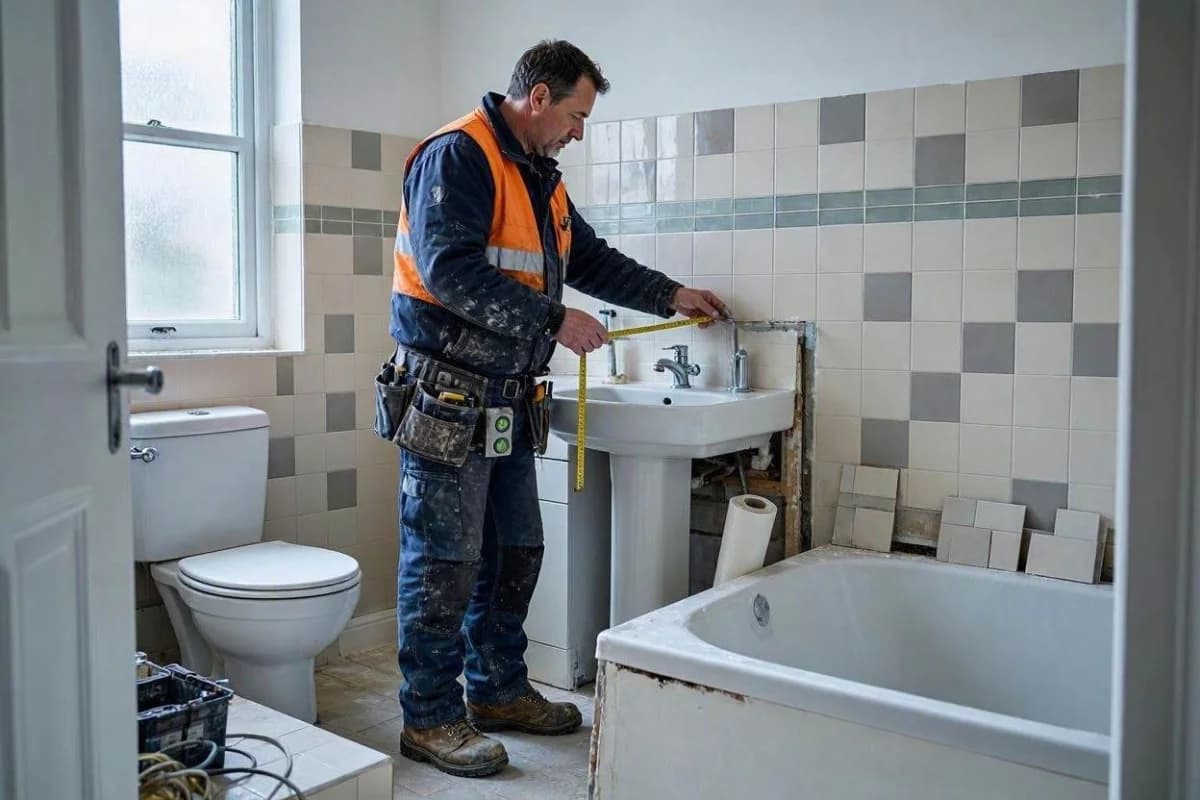
What Making Tax Digital means for tilers
Making Tax Digital for Income Tax (MTD ITSA) is HMRC's programme to move self-employed people and landlords away from paper records. Under MTD you keep digital records of every invoice and receipt throughout the year, then send quarterly summaries of your income and expenses directly to HMRC using compatible software.
For tilers working across London, Manchester, Birmingham, Leeds, and other UK cities, the practical impact is significant. Instead of gathering 12 months of receipts in January and handing them to an accountant, you maintain a running digital record and HMRC receives updates every three months. You still send a tax return (previously called the final declaration) after the year ends, but through your MTD software, and HMRC pre-fills PAYE, pensions and CIS deductions.
The change matters especially for tilers because of how cash flow and expenses work in the trade. A large bathroom refurbishment in Surrey might require £2,000 to £5,000 of tiles, adhesive, membrane, and backer board bought upfront before a single payment arrives from the customer. MTD software that links your material purchases to the job they relate to makes it straightforward to demonstrate that each cost was incurred wholly and exclusively for that project.
MTD deadlines and thresholds (2026 to 2028)
HMRC is phasing in MTD for Income Tax over three years. The threshold refers to your qualifying income: your self-employment and property turnover before any expenses are deducted (CIS income counts gross, before deductions). It is measured two tax years earlier, so 2024-25 income decides April 2026, 2025-26 decides April 2027 and 2026-27 decides April 2028.
| Start date | Income threshold | Who is affected |
|---|---|---|
| April 2026 | Above £50,000 | Higher-turnover sole traders and landlords |
| April 2027 | Above £30,000 | Mid-range sole traders, including many experienced tilers |
| April 2028 | Above £20,000 | Most self-employed tilers working full time |
The quarterly submission deadlines fall on 7 August, 7 November, 7 February, and 7 May each year, with your tax return due by 31 January after the tax year ends. Payment dates are unchanged (31 January and 31 July), and no tax is paid with the quarterly updates. Miss a deadline and HMRC's points-based penalty system begins to accumulate against your account: one point per missed deadline, and at four points a £200 penalty, then £200 for each further miss. People who joined in April 2026 get no points for late quarterly updates in 2026-27, and Budget 2026 (28 October 2026) announced the same for people joining in April 2027, for 2027-28. That relief still has to be passed into law, and the updates must still be sent before your tax return. Late tax returns and late payment are still penalised.
If you are already registered as a sole trader or partnership and your turnover is approaching the relevant threshold, now is the right time to get your digital record-keeping in order. HMRC recommends signing up voluntarily before the mandated start date so you have time to adjust your workflow.
Tiler expenses you can claim
One of the biggest advantages of MTD software for tilers is automatic expense categorisation. When you scan a receipt from a tile merchant or builders merchant, the software reads the amount and supplier and drops it into the correct HMRC category. Here are the main allowable expenses for tilers in the UK.
- Tiles and mosaics: ceramic, porcelain, natural stone, glass mosaic, and any other tile supplied for a specific customer job. Tilers often buy materials in bulk for large bathroom or kitchen projects, then claim the full material cost against the invoice that job generates.
- Adhesive and grout: standard and flexible adhesive, ready-mixed and powdered grout, and specialist products for wet rooms or underfloor heating systems.
- Waterproof membrane and backer board: Schluter Kerdi, Wedi, Aquapanel, Hardiebacker, and equivalent products used to prepare wet-room and shower enclosures.
- Specialist tools: angle grinders, wet saws, electric tile cutters, suction cups, notched trowels, grout floats, and laser levels. Tools costing under approximately £300 are typically expensed immediately; larger items may need to be capitalised and claimed through capital allowances.
- PPE: knee pads, safety goggles, dust masks rated FFP3 for silica dust, safety boots, and work gloves.
- Waste removal: skip hire or licensed waste carrier fees for tile off-cuts, spent adhesive, and demolished tile debris from renovation sites.
- Van running costs: fuel, insurance, servicing, and repairs on a vehicle used wholly or partly for your tiling business. If the van is also used privately you must apportion the cost.
- Subcontractor labour: payments to other tilers or labourers hired to assist on larger commercial projects. Keep the subcontractor's invoice and confirm whether CIS deductions apply.
MTD software that lets you photograph receipts on-site, match them to a specific job, and attach notes such as "master bathroom, 47 Elm Road, Bristol" creates an audit trail that satisfies HMRC record-keeping requirements without any additional paperwork at year end.
MTD software comparison for tilers
Several software platforms are now HMRC-recognised for MTD for Income Tax. The table below compares the options most relevant to self-employed tilers (Sleepless Tradesman prepares your figures for export and does not yet submit to HMRC), based on ease of use, trade-specific features, and cost (as of October 2026).
| Software | Monthly cost | Receipt scanning | Trade job linking | Auto quarterly submit | Best for |
|---|---|---|---|---|---|
| Sleepless Tradesman | Free plan includes MTD records; paid plans from £29.99/mo | AI-powered (paid plans) | Yes, per job (paid plans) | Prepares figures (export to submit); direct HMRC submission coming once HMRC approves it | Sole-trader tilers who want an all-in-one trade tool |
| QuickBooks Self-Employed | £10/mo (Sole Trader plan) | Yes | No | Yes | Tilers already using Intuit products |
| FreeAgent | £19/mo ex VAT (or free with NatWest, RBS, Ulster Bank or Mettle) | Yes | Limited | Yes | Tilers who bank with NatWest, RBS, Ulster Bank or Mettle |
| Xero | £18 to £70/mo ex VAT | Yes (Hubdoc add-on) | Via projects module | Yes | Tilers with an accountant who uses Xero |
Prices shown are indicative (as of October 2026; QuickBooks from a secondary source). All other platforms are listed on HMRC's recognised software register; Sleepless Tradesman prepares your figures for you or your accountant to submit, and direct submission is coming once HMRC approves it. Features may vary by plan tier.
Sleepless Tradesman
Sleepless Tradesman is built specifically for UK tradespeople and handles MTD as part of a broader suite that covers quoting, invoicing, job management, and expense tracking. For tilers the key feature is job-linked expenses: when you buy 80 square metres of porcelain from a tile merchant in Leeds or Bristol, you scan the receipt and attach it to the specific job (AI scanning and job profit are on paid plans; the MTD records and quarterly figures are on the free plan). At quarter end the software totals your income and allowable expenses, ready to export for you or your accountant to submit; direct submission is coming once HMRC approves it. The AI receipt scanner reads merchant names common in the tiling trade, including Topps Tiles, Tile Giant, Tile Warehouse, and independent factors, and populates the expense category and VAT fields automatically.
QuickBooks Self-Employed
QuickBooks Self-Employed is a well-established option from Intuit that covers the MTD basics competently. Bank feed categorisation works well once you train it on your regular suppliers. The main limitation for tilers is that it does not link expenses to individual jobs, so matching a Jewson or Travis Perkins receipt to a specific customer project requires manual notes. It suits tilers who want a straightforward bookkeeping tool without the project-management features.
FreeAgent
FreeAgent is a strong all-rounder from Edinburgh-based software company FreeAgent Central Ltd, acquired by NatWest Group in 2018. It is available free to NatWest, Royal Bank of Scotland, and Ulster Bank business current account holders, and to Mettle customers, making it attractive if you already bank with one of those providers. The invoicing and bank reconciliation features are polished, and HMRC quarterly submissions are handled automatically. Job-level expense tracking is limited compared to trade-specific tools.
Xero
Xero is a comprehensive accounting platform popular with accountants across the UK. Smart document capture (on every plan, alongside Hubdoc) handles receipt scanning, and the Projects module lets you allocate costs to individual jobs. The interface is more complex than trade-specific apps and the higher plan tiers add cost that most sole-trader tilers would not justify unless their accountant already uses Xero and the collaboration benefit is clear.
How Sleepless Tradesman handles MTD automatically
Sleepless Tradesman connects your day-to-day tiling work to your tax position in real time. The workflow for a tiler keeping MTD digital records looks like this:
- You quote a bathroom tiling job in Manchester for £3,400 using the quoting tool. The customer accepts and the job is created in your schedule.
- You buy tiles, adhesive, and membrane from your local trade supplier. On-site, you photograph the receipt with your phone. The AI scanner (paid plans) reads the supplier, amount, and VAT, and attaches the expense to the Manchester bathroom job automatically.
- When you invoice the customer, the invoice total is recorded as income for the quarter in which it is issued.
- At the end of each quarter, Sleepless Tradesman totals your income and categorised expenses and presents a summary for your review. You confirm the figures and export the summary for you or your accountant to submit (direct submission to HMRC is coming once HMRC approves it).
- After the tax year ends, your full-year records are ready to export for your year-end tax return, which you or your accountant complete and submit to HMRC through MTD-compatible software by 31 January.
The result is that your tax compliance happens as a by-product of your normal day-to-day workflow. You are not building spreadsheets; you are just running your tiling business and the software prepares the figures in the background.
What goes into a quarterly submission
Each quarterly update you send to HMRC is a summary, not a detailed transaction list. You report cumulative totals from 6 April: your trading income and your allowable expenses broken into a small number of categories. No tax is paid with the update, you still send one for a quarter with no income (a nil update), and any correction goes in your next update. HMRC does not receive individual receipts or invoice lines at the quarterly stage; those are held in your digital records and must be available if HMRC selects you for a check.
For tilers the income figure is the total of invoices issued, including any materials you have charged to the customer on top of your labour. The expense categories include cost of goods sold (tiles, adhesive, membranes), general trade expenses (tools, PPE), motor expenses (van), and any other allowable costs. If you work under CIS, the income is the gross amount before deductions. CIS deductions are not part of the quarterly update: HMRC uses the deductions your contractors report in its tax estimate and pre-fills them in your tax return, and any refund comes once a year with that return.
HMRC uses your quarterly figures to give you an in-year tax estimate, which means you can see how much tax you are likely to owe before the January payment deadline. This is one of the practical upsides of MTD: fewer January surprises.
Quick wins
- Sign up for your chosen MTD software before your mandated start date so you have at least one quarter of practice.
- Open a dedicated business bank account for your tiling income and expenses so bank feeds populate your software automatically.
- Photograph every tile merchant and builders merchant receipt on the day of purchase before it fades or gets lost in the van.
- Attach each material receipt to the specific job it relates to so your quarterly figures are accurate and defensible.
- Set a calendar reminder for the 5th of each submission month (August, November, February, May) so you review your figures before the 7th deadline.
Methodology and disclosure: This guide was produced by the Sleepless Tradesman editorial team in August 2026. Software pricing was checked against each provider's published pricing page in October 2026 (QuickBooks prices from a secondary source). Sleepless Tradesman is compared alongside competitors in the interests of giving readers an objective view; we naturally recommend our own product where it is the best fit for the trade, but we have included honest assessments of alternatives. This guide is for general information only and does not constitute tax advice. Consult a qualified accountant or tax adviser for advice specific to your circumstances.
Frequently asked questions
When does MTD for Income Tax apply to tilers?
HMRC is rolling out Making Tax Digital for Income Tax in three waves. From April 2026, sole traders and landlords with qualifying income (self-employment and property turnover) above £50,000 in 2024-25 must comply. From April 2027, the threshold drops to £30,000 (based on 2025-26). From April 2028, it drops again to £20,000 (based on 2026-27). Tilers whose annual turnover sits above the relevant threshold must use compatible software to keep digital records and submit quarterly updates to HMRC.
What tiling expenses are allowable under HMRC rules?
As a self-employed tiler you can claim tiles and mosaics, adhesive and grout, waterproof membrane and backer board, specialist tools such as tile cutters, wet saws, and suction cups, PPE including knee pads and safety goggles, waste removal and skip hire, van running costs, and subcontractor labour. The key rule is that the cost must be incurred wholly and exclusively for the purpose of your trade.
Do I need to submit a Self Assessment tax return under MTD?
Yes. Under MTD for Income Tax you submit four quarterly updates to HMRC during the tax year, then your tax return after the year ends, by 31 January, through MTD-compatible software. It covers the same ground as the traditional Self Assessment return, and HMRC pre-fills PAYE, pensions and CIS deductions. Payment dates stay 31 January and 31 July. Sleepless Tradesman keeps your quarterly figures and full-year records ready to export for you or your accountant to submit; direct submission is coming once HMRC approves it.
Can I still use a spreadsheet under MTD?
Spreadsheets alone are not MTD-compatible because they cannot submit data directly to HMRC. You would need bridging software sitting between your spreadsheet and HMRC, which adds cost and complexity. Most tilers find it simpler to switch to dedicated MTD software that handles record-keeping and submissions in one place.
What is the penalty for missing an MTD quarterly submission?
HMRC uses a points-based penalty system. Each missed deadline earns one penalty point. When you reach four points (for quarterly filers) you get a £200 penalty, then another £200 for each further missed deadline. Points expire after a period of compliance. People who joined in April 2026 get no points for late quarterly updates in 2026-27, and Budget 2026 (28 October 2026) announced the same for people joining in April 2027, for 2027-28, subject to legislation still to be passed; the updates must still be sent before your tax return. Late tax returns and late payment are still penalised: from April 2027, late payment costs 4% of the tax unpaid at day 15, another 4% at day 30, then 10% a year, and the points system applies to everyone who files a Self Assessment return. The key protection is having your figures ready well before each deadline.
Stop worrying about quarterly deadlines
Sleepless Tradesman tracks your tile and material costs, scans receipts on-site, and prepares your MTD figures automatically. Built for UK tilers.
Try Sleepless Tradesman freeRelated guides