How Much Does Block Paving Cost in the UK? [2026]
Written by Tom Ellis · Senior Trades Editor
Last updated: July 2026
Last updated: July 2026 · United Kingdom
Quick Answer
Last updated: July 2026 · United Kingdom
Block paving costs £50–90 per m² fully installed in the UK, including excavation, sub-base, blocks, and jointing. A typical single driveway (40–50m²) costs £2,500–5,000, while a double driveway (60–80m²) costs £4,500–8,500. Labour typically accounts for 40–50% of the total price.
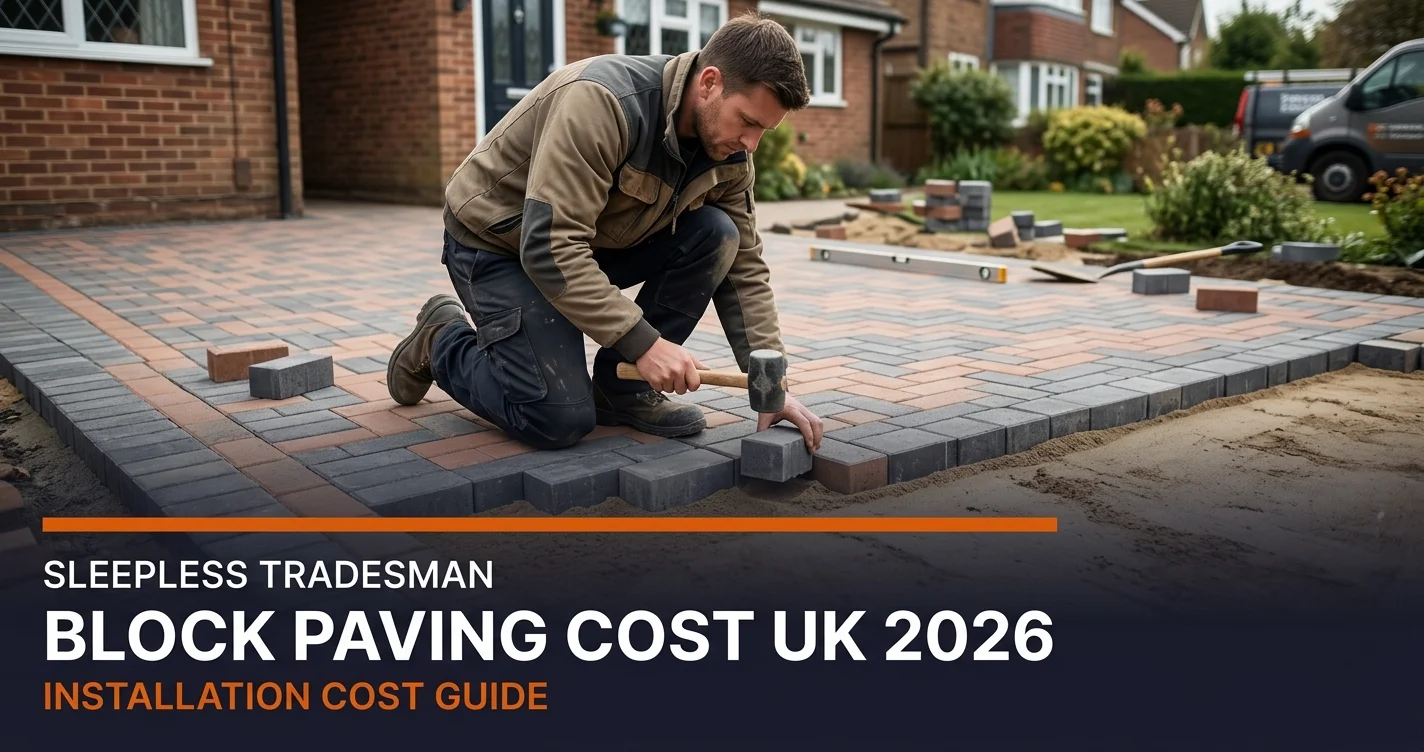
Block Paving Cost UK 2026 — Price Summary
The table below shows the typical installed cost per m² and average project cost for common driveway surface types in the UK. All prices include labour, materials, excavation, and sub-base preparation unless stated otherwise.
| Surface Type | Cost per m² (Installed) | Single Driveway (40–50m²) | Double Driveway (60–80m²) |
|---|---|---|---|
| Concrete block paving | £50–90 | £2,500–4,500 | £4,500–7,200 |
| Brick paving | £60–110 | £3,000–5,500 | £4,800–8,500 |
| Resin-bound aggregate | £40–80 | £2,000–4,000 | £3,600–6,400 |
| Tarmac / tarmacadam | £25–50 | £1,250–2,500 | £2,200–4,000 |
| Gravel | £15–35 | £750–1,750 | £1,200–2,800 |
| Dropped kerb (council + contractor) | N/A | £500–2,000 (add-on) | £500–2,000 (add-on) |
| Drainage channel (linear drain) | N/A | £300–800 (add-on) | £300–800 (add-on) |
Prices are national averages for 2026. Costs in London and the South East can be 20–40% higher. Prices include VAT at 20% where applicable.
What's Included in a Block Paving Quote?
A reputable block paving contractor should provide a fully inclusive quote covering the following elements. Always ask for a written, itemised breakdown to avoid unexpected costs at the end of the project.
- Excavation: Digging out the existing surface to a depth of approximately 200–250mm to accommodate the sub-base and bedding layers.
- Spoil removal: Removal and disposal of excavated soil and old materials; this is often a hidden cost — confirm it is included.
- MOT Type 1 sub-base: A compacted hardcore layer of at least 150mm to provide a stable, load-bearing foundation and prevent sinking.
- Sharp sand bedding layer: Approximately 40–50mm of sharp sand screeded flat before block laying.
- Blocks / pavers: The surface blocks themselves — concrete, clay brick, or permeable variants.
- Edge restraints / edging: Concrete haunching or proprietary edging units to prevent the blocks from spreading at the perimeter.
- Kiln-dried jointing sand: Brushed into the joints after laying and vibrated in to lock the blocks in place.
- Sealer (optional): A surface sealant applied to protect against staining and enhance colour — ask if this is included or priced separately.
Note that a dropped kerb (council application fee plus contractor installation) is not included in standard driveway quotes. If your driveway crosses a public pavement, budget an additional £500–2,000 for this separately.
Factors That Affect Block Paving Costs
Several variables can push your block paving quote above or below the average ranges above. Understanding these factors helps you budget accurately and compare like-for-like quotes.
- Driveway size: Larger areas benefit from economies of scale — the cost per m² often falls once you exceed 60–70m² because fixed costs (skip hire, plant hire, travel) are spread over more blocks.
- Block material and quality: Entry-level concrete blocks cost £8–15/m² in materials alone, while premium clay bricks or natural stone setts can reach £30–60/m² just for materials. The choice dramatically affects the overall project cost.
- Pattern complexity: Simple stretcher-bond or half-brick patterns are quicker to lay. Herringbone, basketweave, or fan patterns require more cuts and skilled time, adding 10–20% to labour costs.
- Existing surface: If you are replacing an old tarmac or concrete driveway, the cost of breaking up and removing the existing surface adds £5–15/m² to the quote.
- Ground conditions: Poor drainage, soft ground, tree roots, or sloping terrain all increase groundwork costs. A site survey before quoting should identify any issues.
- Drainage requirements: Adding a linear drain or channel drain at the entrance of the driveway to prevent water pooling adds £300–800 per installation.
- Access difficulties: Narrow side entrances or restricted access for machinery can increase hand-dig and manual handling costs significantly.
- Location: Labour costs vary considerably across the UK — London and the South East can be 30–40% more expensive than the North or Scotland for the same work.
Regional Cost Variation UK 2026
Labour rates are the primary driver of regional price differences. The table below shows how block paving costs vary across the UK relative to the national average of £65–70/m² installed.
| Region | Typical Cost (per m², installed) | vs National Average |
|---|---|---|
| London | £70–125 | +30–40% |
| South East | £58–105 | +15–20% |
| East England | £53–99 | +5–10% |
| Midlands | £50–90 | National average |
| Yorkshire | £45–85 | −5–10% |
| North West | £45–85 | −5–10% |
| North East | £43–77 | −10–15% |
| Scotland | £43–77 | −10–15% |
| Wales | £43–77 | −10–15% |
Regional rates are estimates based on 2026 labour market data. Always obtain at least 3 local quotes to benchmark against these figures.
How to Find a Good Paving Contractor in the UK
Block paving is an unregulated trade — there is no mandatory licensing scheme equivalent to Gas Safe for gas engineers or NICEIC for electricians. This means the quality of tradespeople varies widely, and due diligence is essential before committing to any contractor.
While there is no single accreditation body for driveway pavers, look for contractors who are members of the Federation of Master Builders (FMB) or who can demonstrate membership of a recognised trade association. The Interpave organisation (the precast concrete paving trade body) provides guidance on good installation practice and a contractor finder tool.
When vetting a paving contractor, check the following:
- Public liability insurance: Ask for proof of a minimum of £1 million public liability cover. Any reputable contractor will provide this without hesitation. Do not allow work to begin without it.
- Three written quotes: Always obtain at least 3 itemised written quotes to compare like for like. Be wary of quotes that are vague about materials, depths, or what is included.
- Portfolio and references: Ask to see photographs of completed driveways and, where possible, speak to previous customers. A confident contractor will have no objection.
- Check reviews: Look for reviews on Checkatrade, Which? Trusted Traders, or Google Maps. Read negative reviews carefully — look for patterns rather than isolated complaints.
- Payment terms: Never pay the full amount upfront. A reasonable deposit of 10–25% is normal; the remainder should be paid in stages or on satisfactory completion.
Three red flags to watch out for:
- Unsolicited door-knocking ("We have leftover tarmac"): This is a classic rogue trader tactic. Legitimate contractors do not cold-call homeowners with suspiciously cheap offers.
- Cash-only with no VAT receipt: If a contractor insists on cash and cannot provide a VAT invoice (assuming they are VAT-registered), it suggests they are operating outside normal business practice.
- No written contract or specification: If the contractor refuses to provide a written quote detailing materials, depths, and scope of works, walk away. Verbal agreements are almost impossible to enforce if problems arise.
Frequently Asked Questions
How much does block paving cost in the UK in 2026?
Concrete block paving costs £50–90 per m² fully installed, including excavation, sub-base, sand, blocks, edging, and jointing. For a typical single driveway of 40–50m², expect to pay £2,500–5,000. A double driveway of 60–80m² typically costs £4,500–8,500. Premium materials such as brick paving push costs towards £60–110/m², while budget options like tarmac start from just £25–50/m².
Do I need planning permission for a new driveway?
Planning permission is required if you are laying an impermeable surface (such as standard tarmac or concrete) over more than 5m² in front of your house. Impermeable materials do not allow rainwater to drain through, increasing flood risk. However, SUDS-compliant alternatives — including permeable block paving, resin-bound aggregate, and gravel — do not require planning permission regardless of area. Always check with your local planning authority if you are unsure, particularly if your property is in a conservation area.
How long does block paving last?
A properly installed block paving driveway should last 20–30 years with reasonable maintenance. The longevity depends heavily on the quality of the sub-base: a 150mm compacted MOT Type 1 sub-base is essential to prevent sinking and shifting. Individual blocks can be lifted and relaid if they settle unevenly, which is a major advantage over poured concrete. Resealing every 3–5 years and re-sanding joints annually will significantly extend the life of the surface.
Is a resin driveway better than block paving?
Resin-bound driveways cost £40–80/m² and offer a smooth, seamless finish that is highly permeable — meaning no planning permission is required. They are low maintenance, UV-stable, and resistant to weeds. Block paving, by contrast, allows individual blocks to be replaced if damaged, can look more traditional, and is generally more cost-effective for larger areas. The right choice depends on your budget, aesthetic preference, and whether drainage compliance is a concern.
Do I need a dropped kerb for a new driveway?
Yes — if your driveway crosses a public pavement (footway), you are legally required to have a dropped kerb installed. You must obtain council approval before installation; driving over an unmodified kerb can result in fines and liability for any pavement damage. The council-approved dropped kerb typically costs £500–2,000 depending on your local authority and the complexity of the works. This cost is separate from the driveway paving itself and is not included in most contractor quotes.
How do I maintain block paving?
Regular maintenance keeps block paving looking good and prevents costly repairs. Brush kiln-dried jointing sand into the gaps annually to inhibit weed growth and stabilise blocks. Apply a block paving sealant every 3–5 years to protect against oil stains, frost damage, and colour fading. Remove weeds promptly using a weed killer or by hand — avoid using a pressure washer too aggressively as it can dislodge jointing sand. If individual blocks sink or shift, lift them, add or remove bedding sand, and relay — this is straightforward if you kept spare matching blocks from the original installation.
Related Guides
Get an Instant Cost Estimate
Describe your project to our AI and get an itemised cost estimate instantly.
Get a Free Estimate