How Much Does Plastering Cost in the UK? [2026]
Written by Tom Ellis · Senior Trades Editor
Last updated: July 2026
Last updated: July 2026 · United Kingdom
Quick Answer
Last updated: July 2026 · United Kingdom
A skim coat for one standard room costs £150–£350, while a full strip and replaster of the same room costs £350–£800. Plasterer day rates run at £200–£350 per day. For an entire 3-bedroom house, expect to pay £2,000–£4,000 for a full skim throughout.
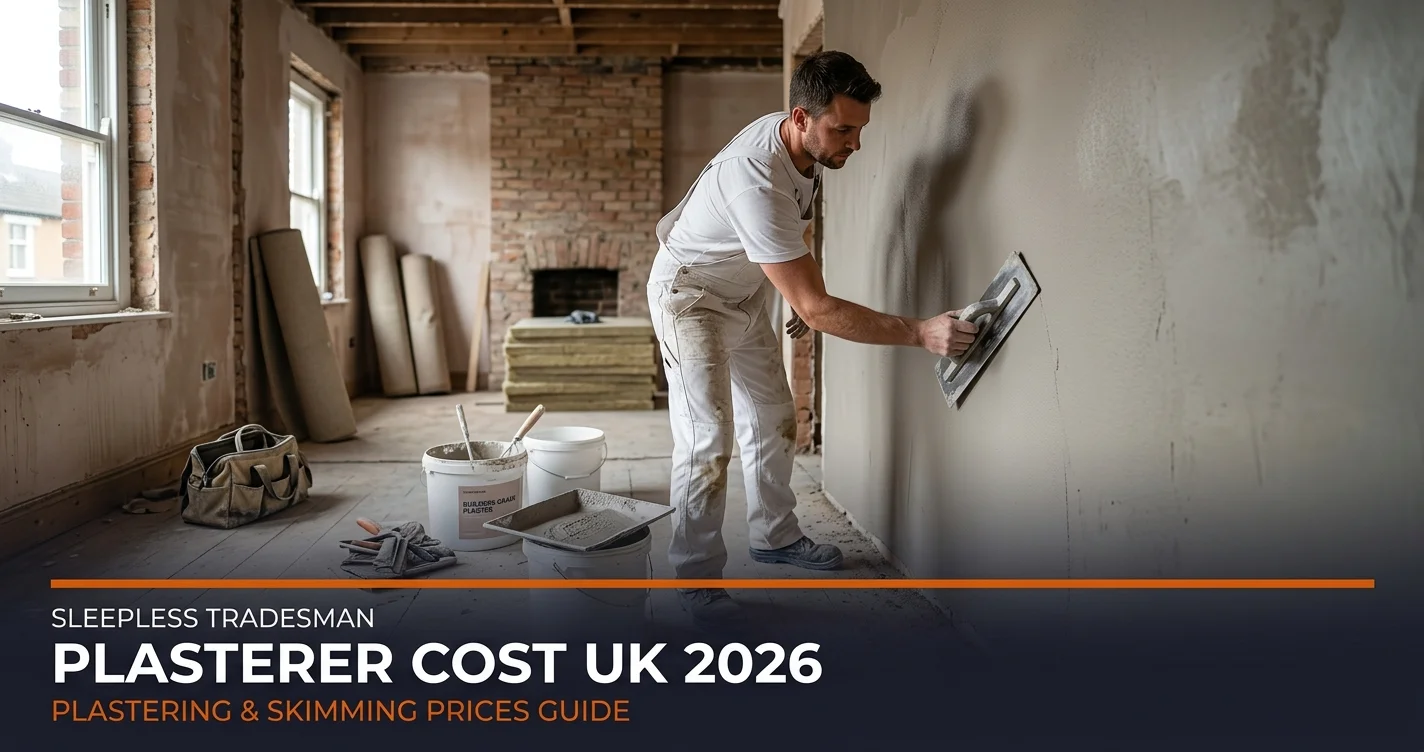
Plastering Cost Summary UK 2026
| Job Type | Typical Cost | Duration |
|---|---|---|
| Skim coat — one standard room (10–14m²) | £150–£350 | 1 day |
| Full replaster — one room (strip and replaster) | £350–£800 | 2–3 days |
| Small patch repair | £75–£200 | Half day |
| Artex removal and skim — per room | £300–£600 | 1–2 days |
| Whole house skim (3-bed, 8 rooms) | £2,000–£4,000 | 1–2 weeks |
| External rendering — per m² | £30–£60/m² | Varies by area |
| Dry lining (plasterboard) and skim — per m² | £20–£45/m² | Varies |
| Coving installation — per linear metre | £15–£30/m | Half to 1 day |
| Plasterer day rate | £200–£350/day | — |
Prices are indicative national averages for 2026. Materials are typically included in a plasterer’s quote unless otherwise stated. Prices in London and the South East are typically 20–40% higher.
What Is Typically Included in a Plastering Quote?
- Labour:The plasterer’s time to prepare, apply, and finish the plaster to a smooth, paint-ready surface.
- Materials: Most plasterers include the cost of finishing plaster, bonding coat, and PVA within their quote, though it is worth confirming this upfront.
- Surface preparation: Brushing down the walls, applying PVA bonding agent where required, and securing any loose plasterboard before skimming.
- Beading and stop beads: Metal angle beads for corners and edges are typically included on full replaster jobs.
- Basic dust sheets: Most plasterers bring their own dust sheets to protect floors and furnishings, but it is good practice to remove valuable items and soft furnishings beforehand.
What is usually not included is the removal and disposal of old plaster on a full replaster job (sometimes charged separately as a skip hire or waste-removal fee), specialist Artex removal if asbestos testing is required, or any structural repairs to the underlying brickwork or blockwork.
Factors That Affect Plastering Costs
- Type of work: A skim coat is the cheapest option and suits walls in reasonable condition. A full replaster is necessary when old plaster is blown, damp-damaged, or crumbling, and costs roughly twice as much due to additional labour and materials.
- Room size: Plasterers often price per room or per square metre. Larger rooms with high ceilings or complex alcoves require more time and materials, pushing costs higher.
- Surface type: Plasterboard (drywall) is the easiest surface to skim as it requires only a single finish coat. Bare brick or blockwork requires a bonding coat first, adding a day and cost. Artex ceilings may also need removal or encapsulation before skimming.
- Access and scaffolding: High ceilings, stairwells, or external rendering jobs requiring scaffolding will add significantly to the overall cost.
- Condition of existing walls: Walls with heavy cracking, damp patches, or previous poor repairs take longer to prepare, increasing labour costs.
- Location: Plasterers in London and the South East command the highest rates. Moving north or into Wales and Scotland typically brings costs down by 10–15%.
- Number of rooms: Booking a plasterer for multiple rooms or a whole house often results in a better overall price per room than hiring them for individual rooms one at a time.
- Time of year: Demand for plasterers spikes in spring and summer. Booking in autumn or winter may secure a lower price and a quicker start date.
Regional Cost Variation UK 2026
Plasterer rates vary considerably across the UK. The figures below show how much you might pay for a skim coat on one standard room compared to the national average of £150–£350.
| Region | Skim Coat (1 Room) | vs National Average |
|---|---|---|
| London | £200–£490 | +30–40% |
| South East | £175–£420 | +15–20% |
| East of England | £160–£385 | +5–10% |
| Midlands | £150–£350 | National average |
| Yorkshire | £135–£330 | −5–10% |
| North West | £135–£330 | −5–10% |
| North East | £130–£315 | −10–15% |
| Scotland | £130–£315 | −10–15% |
| Wales | £130–£315 | −10–15% |
Regional figures are estimates based on typical market rates for 2026. Actual prices vary by contractor and job specification.
How to Find a Good Plasterer in the UK
Unlike gas engineers (who must be Gas Safe registered) or electricians (who should be registered with NICEIC or NAPIT), plastering has no mandatory government-backed licensing scheme in the UK. This means that anyone can legally call themselves a plasterer — so doing your homework before hiring is essential.
- Check independent reviews: Look for plasterers with verified reviews on Checkatrade, Which? Trusted Traders, or Google. Pay particular attention to photos of finished work — a smooth, flat surface under raking light is the mark of a skilled tradesperson.
- Ask for proof of public liability insurance: Any reputable plasterer should carry a minimum of £1 million in public liability insurance. Ask to see the certificate before work begins — this protects you if your property is damaged during the job.
- Get at least 3 written quotes: Quotes can vary significantly between plasterers, sometimes by 50% or more for the same job. Getting three quotes gives you a realistic sense of the market rate and helps you spot outliers — both suspiciously cheap and unnecessarily expensive.
- Ask about their mixing and timing process: A knowledgeable plasterer will be able to explain the two-coat system for brick or blockwork (bonding coat followed by finish skim), the importance of PVA priming, and the recommended drying time before decoration. Vague answers here are a red flag.
- Request to see previous work: A confident plasterer should be happy to point you to a recent local job or share before-and-after photographs so you can judge the quality of their finish.
Three red flags to avoid:
- Demanding a large cash deposit upfront (over 25–30% of the total quote) before any work has started.
- Refusing to provide a written, itemised quote — a verbal price offers you no protection if the final bill looks very different.
- Quoting a price that is dramatically below every other quote you have received; this often indicates skimping on materials, inexperience, or a plan to add hidden charges once the job is underway.
Frequently Asked Questions
How much does plastering cost per room UK 2026?
In 2026, a skim coat on one standard room (10–14m²) typically costs between £150 and £350, while a full strip and replaster of the same room costs £350–£800. The exact price depends on the room size, the condition of the existing walls, and the region you are in. London and the South East attract premiums of 20–40% above the national average. Always get at least three written quotes before committing to a plasterer.
How long does plaster take to dry before decorating?
Fresh plaster typically takes between 3 and 7 days to dry completely before it is safe to decorate. The drying time depends on the thickness of the plaster, the ambient temperature, and ventilation in the room. A single skim coat in a well-ventilated room during summer may be touch-dry in 3 days, whereas a full two-coat system in a cold or damp room in winter could take 7 days or longer. Decorating too early — before the plaster has turned from pink to a uniform pale cream colour — risks trapping moisture, which leads to paint bubbling, mould, and poor adhesion. Open windows and use gentle background heat to speed up drying without causing the plaster to crack.
What is the difference between a skim coat and a full replaster?
A skim coat is a thin finishing layer (approximately 2–3mm) of finishing plaster applied over existing plasterwork or plasterboard to create a smooth, paint-ready surface. It is ideal when the existing walls are structurally sound but the surface is rough, cracked, or has been skimmed before. A full replaster involves removing all the old plaster back to the bare brick or blockwork before applying a base coat (bonding or browning coat) and a finish skim on top. Full replastering is necessary when old plaster is blowing, damp-damaged, or structurally unstable, and costs roughly twice as much as skimming.
Can I DIY plaster or should I hire a professional?
Plastering is widely regarded as one of the most skill-intensive trades; it takes experienced plasterers years to master the timing and technique required to achieve a flat, smooth finish. For small patch repairs, a confident DIYer can achieve acceptable results using ready-mixed finishing plaster, but anything larger than a dinner-plate patch is likely to show an uneven surface or trowel marks when painted. Poorly applied plaster is difficult and expensive to rectify — it often requires a professional to overskim the entire wall anyway. Unless you have prior experience, hiring a professional plasterer for rooms and large areas is almost always more cost-effective in the long run.
Why is plastering so expensive?
Plastering appears costly because it is an extremely skilled trade that demands years of training and hands-on experience to perform well. Labour accounts for the majority of the cost — a plasterer typically earns £200–£350 per day, and the work cannot be easily automated or cut short without compromising quality. Materials such as bonding coat, finish plaster, and PVA also add up, particularly on full replastering jobs. The relatively short supply of qualified plasterers in the UK, combined with high demand for renovation work, keeps prices firm across the country.
How many days does a plasterer take per room?
A skilled plasterer can skim coat a standard bedroom or living room (10–14m²) in a single day. A full strip and replaster of the same room takes 2–3 days — one day for hacking off the old plaster and allowing the wall to dry, and one to two days for applying the bonding coat and finish skim. Larger rooms, rooms with complex shapes or chimney breasts, or rooms requiring Artex removal will take longer. A whole house skim on a 3-bedroom property (around 8 rooms) typically takes a team of two plasterers one to two weeks.
Related Cost Guides
Get an Instant Cost Estimate
Describe your project to our AI and get an itemised cost estimate instantly.
Get a Free Estimate