EV Charger Installation Cost UK 2026: Home Charging Complete Guide
Written by Tom Ellis · Senior Trades Editor
Last updated: July 2026
Last updated: July 2026 · United Kingdom
Quick Answer
Last updated: July 2026 · United Kingdom
A fully installed 7kW home EV charger costs between £700 and £1,200 in the UK in 2026, including the unit, cabling, and electrician labour. Renters and flat residents can still claim a £350 OZEV grant, though outright homeowners lost eligibility in March 2022. Pairing a smart charger with an off-peak tariff such as Octopus Intelligent Go can cut your charging costs to as little as 7.5p/kWh overnight.
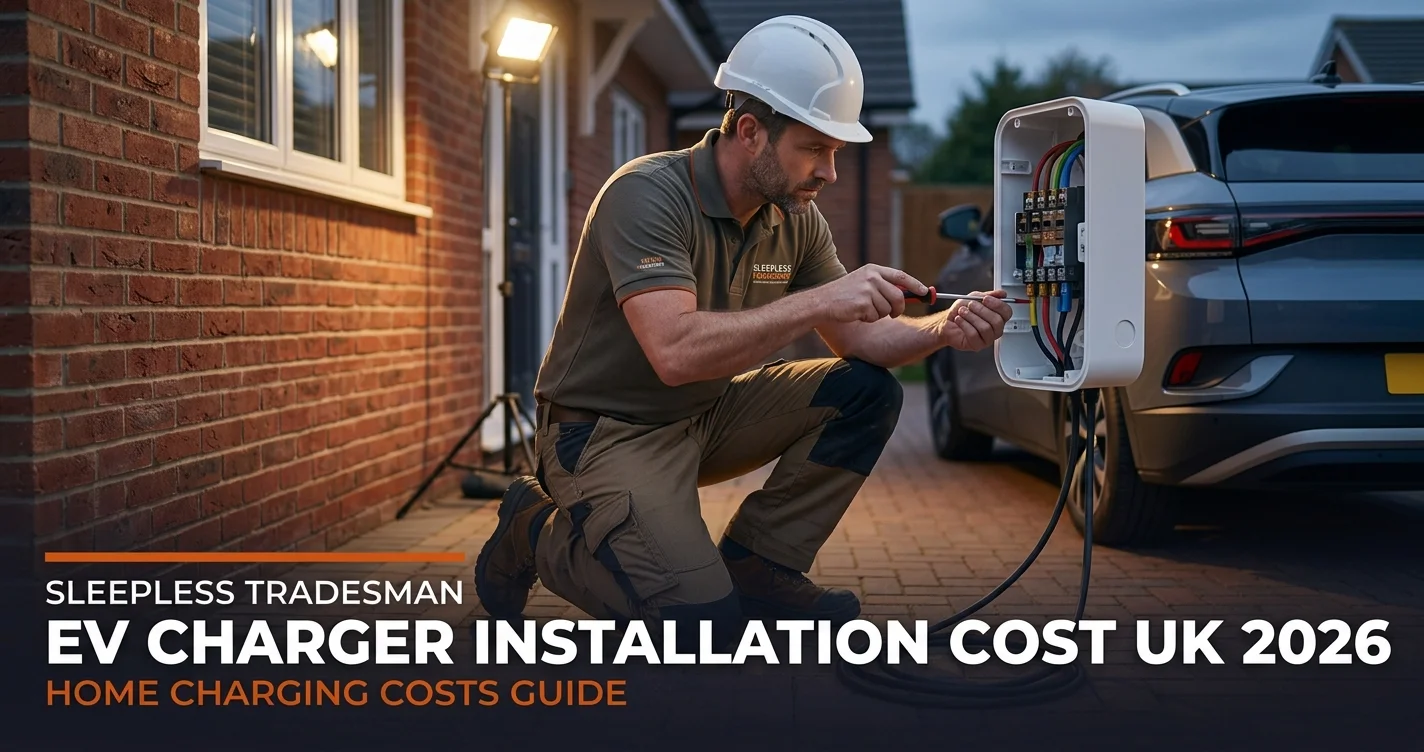
EV Charger Installation Cost Summary
The table below shows typical all-in prices for home EV charger installation in the UK in 2026, including the charger unit, standard cable run, and electrician labour. Prices assume a straightforward installation with the consumer unit reasonably close to the charger location.
| Charger Type | Power | Installed Cost | Notes |
|---|---|---|---|
| Standard smart charger | 7kW | £700–£1,200 | Single-phase supply, most homes |
| Premium/solar divert charger | 7–7.4kW | £1,100–£1,400 | Zappi, Andersen A2 etc. |
| Three-phase charger | 22kW | £1,000–£1,800 | Rare in homes; requires 3-phase supply |
| Cable management trunking | — | +£50–£200 | Add-on if external routing needed |
Prices are typical UK averages for 2026. Costs vary by region, installer, and property.
Popular Home EV Charger Brands and Prices (UK, 2026)
There are several well-regarded home EV chargers available in the UK market. Prices shown are fully installed, including the unit, standard cable run, and labour from an OZEV-registered electrician.
| Charger | Power | Installed Price | Best For |
|---|---|---|---|
| Ohme Home Pro | 7kW | £799–£899 | Smart tariff integration, Octopus users |
| Pod Point Solo 3 | 7kW | £799–£999 | Reliable, app-controlled, wide installer network |
| Easee One | 7.4kW | £799–£899 | Compact design, load balancing |
| Zappi (myenergi) | 7kW | £1,100–£1,400 | Solar panel owners, green energy diversion |
| Hypervolt Home 3 | 7.4kW | £849–£1,050 | UK-made, smart features |
| Andersen A2 | 7.4kW | £999–£1,400 | Premium aesthetics, indoor-grade finish |
Installed prices include standard cable run and electrician labour. Prices correct as of July 2026.
The Ohme Home Pro and Pod Point Solo 3 are the most popular choices for general use, offering solid app control and compatibility with smart tariffs at a competitive price. The Zappi stands apart for solar owners — it can operate in "eco" or "eco+" mode, diverting surplus solar generation to your car before it is exported to the grid, reducing your effective charging cost significantly. The Andersen A2 is the premium option if appearance matters: it is designed to look like interior-grade furniture rather than industrial hardware.
What Affects EV Charger Installation Cost?
Several factors can push the installation cost above or below the typical range:
- Cable run length:The further the consumer unit is from the proposed charger location, the more cable and labour is required. A run through a detached garage or across a property can add £100–£300 to the cost.
- Cable routing complexity:External runs require armoured 6mm² SWA cable and protective trunking or conduit. If the cable must pass through walls, a garage, or underground, costs increase substantially.
- Consumer unit capacity:If your fuse board is old or at capacity, the electrician may need to upgrade it before adding a dedicated EV circuit. A consumer unit upgrade adds £500–£1,000 to total costs.
- Charger brand and model:Unit costs vary from around £300 for a basic smart charger to over £700 for premium models. Labour is broadly similar regardless of brand.
- Regional pricing:Labour rates in London and the South East are typically 20–30% higher than the UK average. Northern England, Scotland, and Wales tend to be cheaper.
- Three-phase supply:Very few UK homes have a three-phase electricity supply. If yours does, you can install a 22kW charger, but the installation is more complex and costs more. Most people on single-phase supply are perfectly well served by a 7kW unit.
Government Grants for EV Charger Installation (2026)
The UK government has significantly narrowed the home EV charger grant since its launch as the Electric Vehicle Homecharge Scheme (EVHS). Here is the current position:
| Scheme | Grant Amount | Eligible? |
|---|---|---|
| EV Chargepoint Grant (OZEV) — renters/flats | £350 | Yes — renters, flat residents, social housing |
| EV Chargepoint Grant — outright homeowners | — | No — ended March 2022 |
| Workplace Chargepoint Scheme | £350/socket, up to 40 sockets | Yes — businesses and charities |
To claim the EV Chargepoint Grant as a renter or flat resident, you must use an installer from the OZEV-registered list. The grant is applied as a discount at the point of installation — you do not need to claim it yourself. The installer handles the paperwork on your behalf.
For businesses, the Workplace Chargepoint Scheme is very generous — up to 40 sockets at £350 each means up to £14,000 in grant funding for a large car park installation. The scheme covers small and medium-sized businesses as well as charities and public sector bodies.
Smart Charging: How Much Can You Save?
One of the biggest financial arguments for installing a dedicated home charger — rather than relying on a three-pin plug — is the ability to take advantage of time-of-use electricity tariffs. A smart charger can automatically schedule charging for the cheapest overnight periods.
Example: Tesla Model 3 Long Range (77kWh battery)
- Octopus Intelligent Go off-peak rate: ~7.5p/kWh — full charge cost: ~£5.78
- Standard rate: ~24p/kWh — full charge cost: ~£18.48
- Saving per full charge: ~£12.70
- Annual saving (charging 3× per week): ~£1,980
The Octopus Intelligent Go tariff is currently one of the best for EV drivers. It offers around 7.5p/kWh overnight (typically 23:30–05:30) and integrates directly with compatible chargers including the Ohme and Hypervolt, automatically scheduling your car to charge in the cheap window without you needing to think about it.
A 7kW charger adds approximately 40 miles of range per hour of charging. A full charge of a car with a 77kWh battery takes roughly 10–11 hours from nearly flat, making overnight charging on a timer the natural use case for most drivers.
For solar panel owners, the Zappi charger adds another dimension: it can divert surplus solar generation — energy that would otherwise be exported to the grid at 4–5p/kWh — to your car instead, effectively giving you free miles on sunny days.
Electrician Requirements for EV Charger Installation
All 7kW home EV charger installations are notifiable electrical work under Part P of the Building Regulations in England and Wales. This means the work must be carried out by a qualified electrician who is registered with a competent person scheme (such as NICEIC, NAPIT, or ELECSA). In Scotland and Northern Ireland, separate but equivalent regulations apply.
The installation requires a dedicated circuit run from your consumer unit (fuse board) to the charger location. The standard cable specification is 6mm² twin and earth (T&E) for internal runs, or 6mm² armoured SWA cable for any external sections. The circuit is protected by a dedicated MCB (miniature circuit breaker) and typically includes an RCD for additional protection.
If you wish to claim the OZEV grant (for renters/flats), your installer must also be on the OZEV registered installer list. This is separate from Part P registration — always confirm both when sourcing quotes if you are eligible for the grant.
A standard installation takes 2–4 hours for a straightforward job. More complex installations — longer cable runs, external routing, or properties where the consumer unit needs attention — can take a full day.
Frequently Asked Questions
How much does EV charger installation cost in the UK in 2026?+
A fully installed 7kW home EV charger typically costs between £700 and £1,200 in the UK in 2026, including the unit, cabling, and labour. The price varies depending on the brand chosen, how far the cable run is from your consumer unit, and whether any additional groundwork or trunking is required. Premium brands such as the Andersen A2 or Zappi with solar diversion can push costs towards £1,400 or higher. The cheapest installations occur in homes where the consumer unit is close to the proposed charger location and no special cabling is needed.
Is there still a government grant for home EV chargers in 2026?+
As of 2026, the OZEV EV Chargepoint Grant (formerly EVHS) no longer covers outright homeowners — that eligibility ended in March 2022. However, renters, flat residents, and social housing tenants can still claim a £350 grant towards the cost of a home charger. Businesses can apply for the Workplace Chargepoint Scheme, which provides £350 per socket up to a maximum of 40 sockets. To claim any grant, you must use an OZEV-registered installer.
What is the best home EV charger in the UK?+
The best home EV charger depends on your priorities. For most people, the Ohme Home Pro or Pod Point Solo 3 offer reliable 7kW smart charging at £799–£999 installed and work well with time-of-use energy tariffs. If you have solar panels, the Zappi by myenergi is widely regarded as the best option as it can divert surplus solar energy to charge your car, saving you money. For aesthetics and premium finish, the Andersen A2 is the standout choice. The Hypervolt is a well-regarded UK-made option at £849–£1,050 installed.
Do I need an electrician to install an EV charger?+
Yes — all 7kW home EV chargers must be installed by a qualified electrician. The installation involves running a dedicated circuit (typically 6mm² cable) from your consumer unit to the charger location, which is notifiable electrical work under Part P of the Building Regulations. If you wish to claim the OZEV grant, your installer must also be on the OZEV registered installer list. Attempting a DIY installation will void your charger warranty and your insurer may refuse to cover any resulting damage.
How long does EV charger installation take?+
A standard home EV charger installation typically takes between 2 and 4 hours for a single-phase 7kW unit. The electrician will survey the location, run the cable from the consumer unit to the charger position, mount the unit, and commission it. More complex installations — for example where cabling must be run externally, through a garage, or over a longer distance — can take up to a full day. Three-phase 22kW charger installations are rarer and may take longer due to the more involved electrical work.
What is the cheapest way to charge an electric car at home?+
The cheapest way to charge an electric car at home is to install a 7kW smart charger and pair it with a time-of-use electricity tariff such as Octopus Intelligent Go. This tariff offers rates as low as 7.5p/kWh during overnight off-peak hours, compared to around 24p/kWh on a standard rate. Charging a 77kWh battery (e.g. a Tesla Model 3 Long Range) overnight at the cheap rate costs approximately £5.78 versus £18.48 at peak rates — a saving of over £12 per charge. If you have solar panels, using a Zappi charger to divert surplus generation to your car can reduce your cost even further.
Related Guides
Get Quotes from OZEV-Registered EV Charger Installers
Compare quotes from qualified, vetted electricians in your area. All installers on Sleepless Tradesman are checked and OZEV-registered where applicable.
Find an EV Charger Installer