Heat Pump Installation Cost UK 2026: Air Source, Ground Source & BUS Grant
Written by Tom Ellis · Senior Trades Editor
Last updated: July 2026
Last updated: July 2026 · United Kingdom
Quick Answer
Last updated: July 2026 · United Kingdom
An air source heat pump costs £7,000–£15,000 to supply and install, but the government's Boiler Upgrade Scheme (BUS) grant cuts £7,500 off that price, bringing typical net costs to £2,000–£10,000. Ground source heat pumps cost more — £15,000–£35,000 gross — but the same £7,500 grant applies. Your installer must be MCS-certified and your property must hold an EPC rating of C or above to qualify.
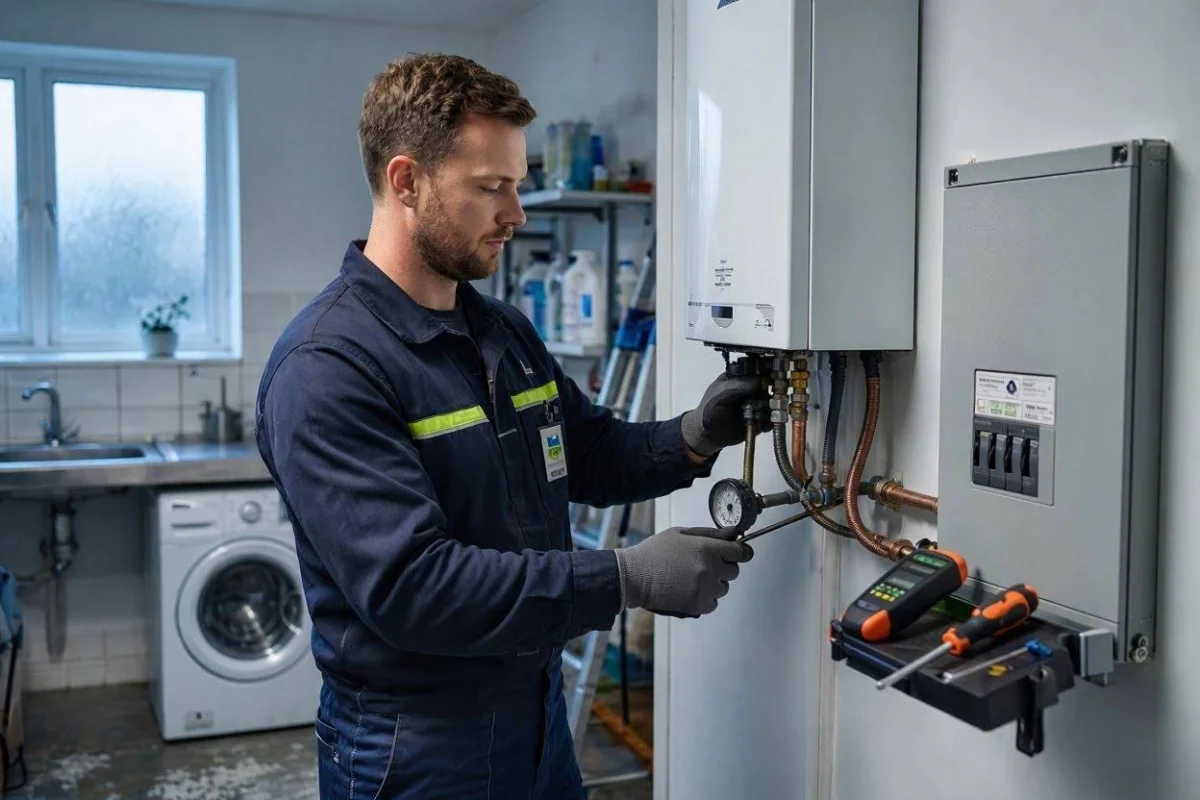
Heat Pump Cost Summary 2026
The table below shows typical supply-and-install costs for both main heat pump types, before and after the Boiler Upgrade Scheme grant.
| Type | Gross Cost | BUS Grant | Net Cost | Typical COP |
|---|---|---|---|---|
| Air Source (ASHP) | £7,000–£15,000 | £7,500 | £2,000–£10,000 | 2.5–3.5 |
| Ground Source (GSHP) | £15,000–£35,000 | £7,500 | £9,000–£27,500 | 3.0–5.0 |
Costs are indicative for a typical UK semi-detached or detached property. Prices vary by region, property size, and specification. Always obtain at least three quotes from MCS-certified installers.
Air Source Heat Pumps (ASHP): Full Cost Breakdown
Air source heat pumps are by far the most common choice for UK homeowners. They extract heat from outdoor air even when temperatures drop below freezing, then compress it to deliver warmth through your radiators or underfloor heating system. The outdoor unit is typically mounted on an external wall or concrete base at ground level.
Gross installation costs range from around £7,000 for a smaller property with a compact unit up to £15,000 or more for a larger home requiring a higher-capacity system and significant pipework modifications. Leading brands in the UK market include Daikin, Mitsubishi Electric, Vaillant Arotherm, Worcester Bosch, and Samsung — all offer units with seasonal COPs of 2.5 to 3.5, meaning they generate 2.5 to 3.5 units of heat for every unit of electricity consumed.
After the £7,500 Boiler Upgrade Scheme grant is deducted at point of sale, many households pay a net price in the range of £2,000–£7,500 — competitive with a straightforward boiler replacement, especially when you factor in lower running costs over time.
| Cost Component | Typical Range |
|---|---|
| Heat pump unit (supply only) | £3,000–£8,000 |
| Labour and installation | £2,000–£4,000 |
| Hot water cylinder (if needed) | £500–£1,500 |
| Radiator upgrades (if required) | £500–£2,000 |
| Electrical upgrades / consumer unit work | £200–£800 |
| Total (gross) | £7,000–£15,000+ |
| After BUS grant (£7,500) | £2,000–£10,000+ |
Ground Source Heat Pumps (GSHP): Costs & Requirements
Ground source heat pumps extract stored solar energy from the ground via a network of buried pipes called a ground loop. They offer a higher COP than air source systems — typically 3.0 to 5.0 — because ground temperatures remain stable year-round at around 10–12°C, providing a more consistent heat source than outdoor air.
The major drawback is cost and space. Horizontal ground loops require roughly 100–150m² of available garden per kilowatt of capacity — typically 600–900m² for a medium-sized home. If land is limited, vertical boreholes drilled to 100–150m depth are an alternative, but borehole drilling adds significantly to installation costs. Total gross costs range from £15,000 to £35,000, though the same £7,500 BUS grant applies, reducing the net outlay to £9,000–£27,500.
Ground source heat pumps are better suited to rural properties with larger plots, and they pair exceptionally well with underfloor heating systems due to their lower flow temperatures. They are rarely cost-effective for urban terraced houses where land is at a premium.
Boiler Upgrade Scheme (BUS) Grant: £7,500 Off
The Boiler Upgrade Scheme is the UK government's primary financial incentive for switching from fossil fuel heating to low-carbon alternatives. As of 2026, the grant is worth £7,500 for both air source and ground source heat pump installations. The grant is not paid to you directly — your MCS-certified installer claims it on your behalf, and you simply pay the net price.
BUS Grant at a Glance
- Grant value: £7,500 for ASHP or GSHP
- Applied at point of sale — deducted from your invoice
- Installer must be MCS-certified
- Property must have EPC rating C or better
- D/E-rated properties may qualify if loft and cavity wall insulation has been installed where applicable
- One grant per property
Step-by-Step: How to Access the BUS Grant
- Check your EPC rating.Visit the EPC register at Find an energy certificate on GOV.UK to look up your property's current rating. If it is D or E, you may still qualify if you can demonstrate that loft insulation and cavity wall insulation have been installed where technically feasible.
- Get quotes from MCS-certified installers. Only accredited installers can access the grant. Use the MCS installer search at mcscertified.com or ask your tradesman to confirm their MCS number.
- Review the quote and confirm grant eligibility. Your installer will carry out a heat loss survey and confirm the system specification before applying for the grant voucher on your behalf.
- Installer applies for voucher before installation. The BUS voucher is issued to the installer before the work begins. Installation must be completed within three months of the voucher being issued.
- Pay the net price on completion.You pay the installer's invoice minus the £7,500 grant. The installer then claims the grant directly from Ofgem.
What Affects the Cost of Heat Pump Installation?
Heat pump installation costs vary considerably between properties. Understanding the key variables helps you budget accurately and evaluate whether quotes you receive are reasonable.
| Factor | Impact on Cost |
|---|---|
| Property size | Larger homes need higher-capacity units; adds £1,000–£4,000 |
| Existing heating system | Underfloor heating is ideal; oversized radiators may need replacing |
| Insulation levels | Poor insulation increases the required system size and running costs |
| Hot water cylinder | Required if you don't already have one; adds £500–£1,500 |
| Electrical supply | May need consumer unit upgrade or additional circuit; adds £200–£800 |
| Brand and model | Premium brands (Daikin, Mitsubishi) cost more upfront but are reliable |
| Ground loops (GSHP only) | Horizontal loops cheaper than vertical boreholes; adds £3,000–£10,000 |
| Region | London and South East labour rates are typically 10–20% higher |
Heat Pump Running Costs vs Gas Boiler
Whether a heat pump saves you money on running costs depends primarily on two factors: how well your home is insulated, and the electricity tariff you use. Heat pumps consume electricity rather than gas, so the relative price of electricity versus gas is central to the calculation.
For a typical semi-detached home with good insulation, an ASHP with a seasonal COP of 3.0 effectively delivers heat at a cost equivalent to a gas boiler running at roughly £0.08–£0.10 per kWh — depending on your electricity tariff. On a standard electricity tariff this can be more expensive than gas, but on smart economy tariffs such as Octopus Agile or Octopus Go (which offer cheap overnight rates), many households achieve comparable or lower running costs than a gas boiler.
The Energy Saving Trust estimates that a well-installed ASHP in a well-insulated home can save between £200 and £800 per year compared to a gas boiler, rising to over £1,000 for larger properties on favourable tariffs. Homes with underfloor heating benefit most, as heat pumps operate most efficiently at lower flow temperatures (35–45°C) rather than the 60–70°C typically needed for standard radiators.
Maximise Your Savings
- Switch to an EV or heat pump electricity tariff (Octopus Go, Agile, or E.ON Drive)
- Ensure loft insulation (270mm mineral wool) and cavity wall insulation are installed first
- Set flow temperature as low as possible while maintaining comfort (try 45°C to start)
- Use weather compensation controls to automatically adjust output in mild weather
- Pair with solar PV panels to offset daytime electricity consumption
Planning Permission for Heat Pumps
In England, installing a single air source heat pump is usually classed as permitted development, meaning you do not need to apply for planning permission. This applies provided the unit is not positioned on a wall or roof that faces a highway, the equipment is at least one metre from the property boundary, and the noise level does not exceed 42 decibels at one metre from any neighbouring window or door.
Permitted development rights do not apply to listed buildings, and they may be restricted in conservation areas, Areas of Outstanding Natural Beauty, National Parks, and the Broads. In these cases you will need to submit a planning application to your local planning authority. Rules in Scotland, Wales, and Northern Ireland differ slightly — always check with your local council before proceeding.
Ground source heat pumps do not require planning permission for the buried pipework, though if you intend to drill a vertical borehole you may need to notify the Environment Agency under the Water Resources Act to ensure the borehole does not contaminate groundwater sources.
For a full overview of what falls under permitted development for domestic properties, see our permitted development rights guide.
Choosing an MCS-Certified Installer
MCS (Microgeneration Certification Scheme) certification is a quality mark that confirms an installer has been independently assessed as competent to design and install heat pump systems to a recognised standard. Without an MCS-certified installer, you cannot access the Boiler Upgrade Scheme grant — this point is non-negotiable.
When evaluating heat pump installers, look for the following:
- Confirmation of current MCS certification (check at mcscertified.com)
- Evidence of manufacturer accreditation (e.g., Daikin D1 Pro, Mitsubishi Diamond Dealer)
- A detailed heat loss calculation (BS EN 12831) carried out before quoting
- A written specification confirming the system design, unit model, and expected seasonal COP
- At least two references from recent local installations
- Clear explanation of the BUS grant process and confirmation they will handle the application
Obtain at least three quotes. Be wary of quotes that appear unusually low — heat pump installations require careful system design and commissioning, and a poorly specified system will deliver poor efficiency and potentially void your warranty.
Frequently Asked Questions
How much does a heat pump cost to install in the UK in 2026?+
What is the Boiler Upgrade Scheme grant and how do I get it?+
Is an air source heat pump worth it in the UK?+
Do heat pumps work in cold UK winters?+
Do I need planning permission for a heat pump?+
What is MCS certification for heat pumps?+
Related Guides
Get Quotes from MCS-Certified Heat Pump Installers
Sleepless Tradesman connects you with vetted, MCS-certified heat pump installers across the UK. Compare quotes, access the £7,500 BUS grant, and start saving on your heating bills.
Find a Heat Pump Installer